Log in
The condo syndicate in Quebec: roles and obligations

Running a building held in divided co-ownership in Quebec relies on a legal structure governed by the declaration of co-ownership, a notarial deed registered in the land register. This document sets out the rules for community living, the structure of the co-ownership and the obligations related to administering the common portions.
What is a condo syndicate?
The condo syndicate is the legal person that brings together all the co-owners of a building held in divided co-ownership, a type of housing where each owner holds a private portion and a share of the common portions.
This legal status takes effect as soon as the declaration of co-ownership is published in the Québec land register. The syndicate then acts as a legal person on behalf of all the co-owners.
Structure and decision-making bodies of the syndicate
As a legal person, the syndicate of co-owners has legal personality, which gives it the capacity to enter into contracts with third parties, employ staff, own and dispose of property, and take legal action to protect its patrimony and defend the co-owners’ collective interests.
Its decision-making structure consists of two separate bodies:
The board of directors handles day-to-day operations, while the meeting of co-owners adopts the by-laws of the property and sets the general direction of the condo.
The syndicate’s board of directors
As the central body, the board of directors of a condo syndicate handles the day-to-day management of the condo and advises co-owners on routine decisions.
It can divide certain responsibilities among its members, hire staff or engage a manager to make running the condo easier. This flexibility lets the board of directors adapt effectively to the condo’s specific needs.
- Composition: The board of directors is generally made up of co-owners elected at the annual general meeting. The number of members varies with the size of the condo, but there must be at least three, unless the syndicate has only two units. The number of board members is set by the notary and written into the declaration of co-ownership.
- Election: Board members are elected by vote at the annual general meeting of co-owners.
- Meetings and decision-making: The board of directors meets regularly to discuss the condo’s current affairs and make important decisions. Board decisions are usually made by a majority vote of the members present at meetings.
Roles and responsibilities:
- Financial management: The board of directors is responsible for the condo’s financial management, including preparing and approving the budget and collecting condo fees.
- Maintenance, work and repairs: The syndicate is responsible for maintaining the condo’s common areas and for the work needed to preserve the building.
- Enforcing the by-laws: The board must ensure the condo’s by-laws are followed and take action when they aren’t.
- Communication: It communicates regularly with co-owners about decisions made, ongoing projects and important issues concerning the condo.
- Legal representation: It legally represents the condo syndicate in legal and administrative matters.
Board members can take training on condo management to better fulfill their responsibilities. They are also accountable to the co-owners for their management and can be held liable for mismanagement or negligence.
It’s important for co-owners to get involved in the election process and choose competent, committed board members, because they will have a direct impact on how the condo is run and on quality of life within it.
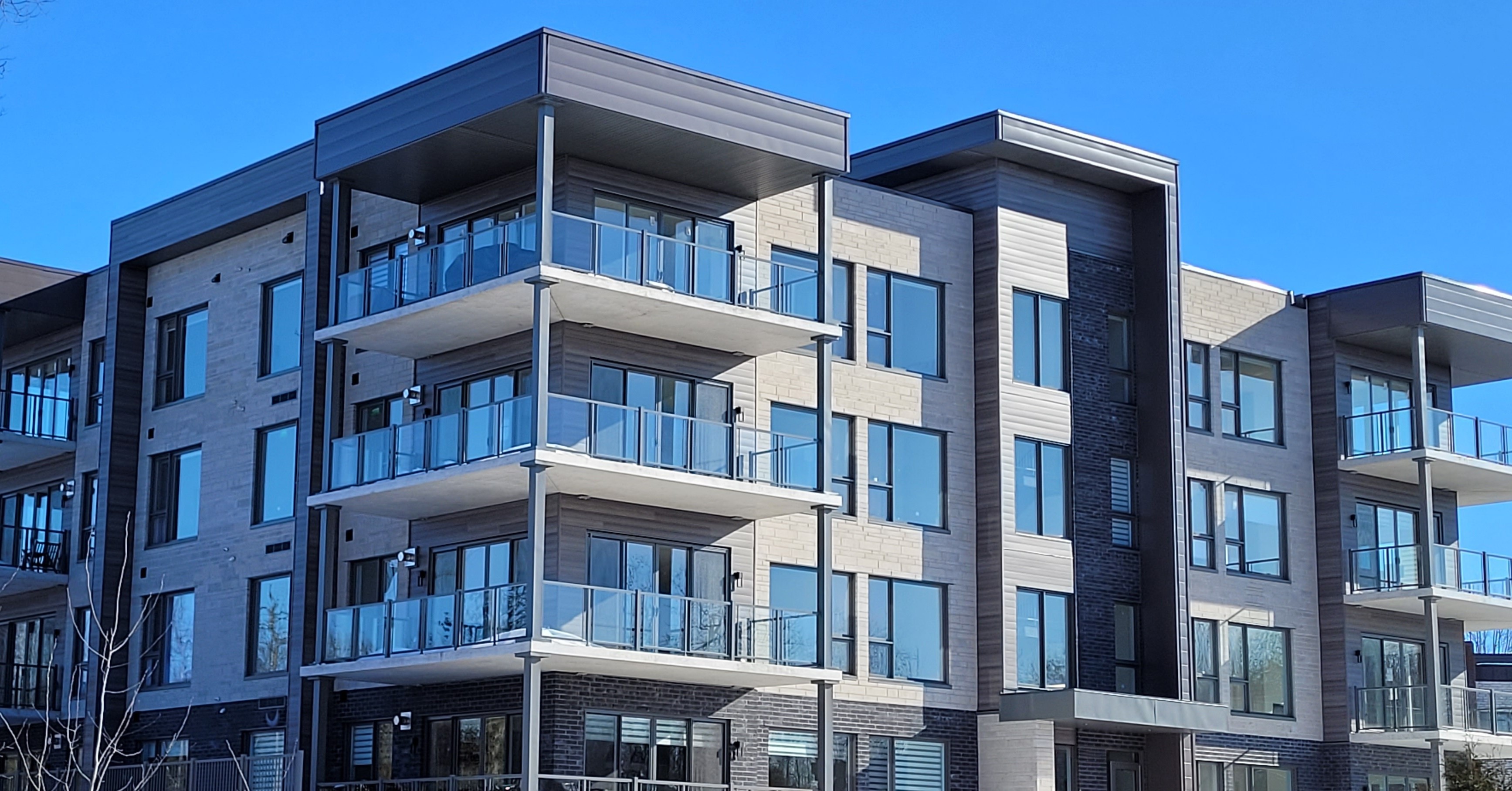 Whatever the size of the building, effective administrative management remains essential.
The meeting of co-owners
The annual general meeting of co-owners is a yearly meeting where all the unit owners in a condo building come together to discuss and make important decisions about how to run the building.
For a meeting of co-owners to make decisions, the law requires that the majority of the votes of the eligible co-owners, present or represented, be gathered: this is called the quorum.
Here is a non-exhaustive list of the meeting’s powers:
- Budget: The meeting does not vote on the budget, but it must be consulted on the condo’s projected budget and on special assessments.
- Amending the declaration of co-ownership: The meeting of co-owners can decide to amend the declaration of co-ownership by the specific majorities that apply to the changes sought.
- Adopting and amending by-laws: The meeting of co-owners has the power to adopt and amend the by-laws of the immovable.
- Work: Work to alter, enlarge or improve the common portions is governed by specific rules. It must be formally authorized by the meeting of co-owners, by the enhanced majority set out in article 1097 of the Civil Code of Québec.
- Electing directors: The meeting of co-owners has the power to elect the members of the board of directors responsible for the day-to-day management of the condo.
Resolutions must be approved by more than half of the votes of the co-owners present or represented at the meeting: this is called an absolute majority. This means a resolution is adopted when the number of votes in favour exceeds the number of votes against plus neutral votes (50% + 1). Blank votes, spoiled votes and abstentions count as votes against.
For specific matters such as amendments to the declaration of co-ownership or work to improve the common portions, the meeting’s approval will require an enhanced majority representing 75% of the votes. In some circumstances, a double majority may even be required for significant amendments to the declaration of co-ownership.
Financial management and obligations of the syndicate
The syndicate’s financial management
The syndicate prepares a projected condo budget that covers the building’s maintenance, management and renovation expenses. It is calculated based on the common expenses, which are divided among the co-owners according to their relative values (shares).
There are three funds:
- Operating fund for current expenses and revenue.
- Contingency fund to finance major repair and renovation work on the building; it is funded by the co-owners’ regular contributions, taken from the common expenses. Its purpose is to plan for the cost of necessary work and major replacements and to avoid special assessments in an emergency.
- Self-insurance fund, introduced by Bill 141, is a financial measure that allows condo syndicates to build up a financial reserve large enough to cover the deductible in the event of a loss. It is funded every year when the projected budget is prepared.
Legal obligations and hypothecs
Legal hypothecs and collection
The declaration of co-ownership may include various provisions to ensure that common expenses are collected.
First, the syndicate sends the co-owner in default a formal notice (demand letter) by registered mail, informing them of the amount of unpaid expenses and the deadline to pay the debt. The declaration of co-ownership may provide for penalties and late-payment interest when common expenses aren’t paid on time.
If the co-owner still doesn’t pay, the syndicate can take stronger measures. Depending on the situation, the board of directors could call on a condo professional for support throughout the process.
- Using a bailiff: The syndicate can call on a bailiff to recover unpaid expenses. The bailiff can send formal notices, seize the defaulting co-owner’s property or take other legal action to obtain payment of the amounts owed.
- Filing in Small Claims Court: If the co-owner doesn’t respond to the formal notice or refuses to pay the unpaid condo fees, the syndicate can file a claim with the Court of Québec, Small Claims Division. The claim seeks a judgment in the syndicate’s favour for payment of the amounts owed.
- Legal hypothec: The declaration of co-ownership may provide for a legal hypothec to be registered on the lots of co-owners who fail to pay their common expenses. This will affect the mortgage loan and allow the condo syndicate to recover the unpaid amounts first from the sale of the lot in the event of default.
- Enforcing a judgment: If judgment is rendered in the syndicate’s favour, the defaulting co-owner is legally required to pay the amounts owed. If the co-owner doesn’t comply with the judgment, the syndicate can take enforcement measures such as seizing property or collecting by other legal means.
The exact procedure may differ depending on the particulars of each situation and the procedural rules in place. In general, however, the condo syndicate is legally entitled to take legal action to recover unpaid condo expenses.
Insurance and civil liability
The condo syndicate must take out various insurance policies to protect the entire building and ensure effective management.
Property insurance covers the building, shared equipment and common portions against damage caused by incidents such as fires, floods or vandalism. The syndicate insures both the common and private portions of the building. This insurance is based on a professional appraisal of the reconstruction value.
Syndicate civil liability insurance is needed to compensate for bodily injury or property damage caused to others, whether through the use of the common portions or as a result of the syndicate’s actions.
Directors’ civil liability insurance protects directors against claims arising from their management, as well as meeting officers. Finally, insurance covering legal costs for potential disputes is often included.
These insurance policies are essential to protect the interests of the syndicate and the co-owners in the event of unforeseen incidents or disputes.
Rights and obligations of co-owners
The rights and duties of co-owners are defined by the law on divided co-ownership and by the condo’s internal by-laws.
Rights:
- Each co-owner has an exclusive right to their private unit, as set out in the declaration of co-ownership.
- Each co-owner has the right to use the condo’s common portions in accordance with the established rules.
- Co-owners have the right to take part in general meetings, vote on important matters concerning the condo and be informed of the decisions made.
- Co-owners have the right to access all relevant information about the condo, including the declaration of co-ownership, the minutes of meetings and the financial statements.
Obligations:
- Co-owners must pay the common expenses, such as maintenance costs, insurance, services, etc., according to their share of the co-ownership.
- Co-owners must follow the condo’s by-laws, including those on the use of the common portions, changes to private units, noise, etc.
- Co-owners have a duty to take part in general meetings and vote on important matters concerning the condo.
- Co-owners are responsible for the maintenance and repair of their private unit. They must also see to the maintenance and minor repairs of the restricted common portions they have exclusive use of (unless the declaration says otherwise).
 It is the syndicate’s responsibility to keep a register that meets the requirements.
Bill 16 and current issues in condos
On July 30, 2025, the Quebec government adopted the official regulation under Bill 16, which came into force on August 14, 2025. This reform redefines the rights and obligations of the condo syndicate by imposing 3 key requirements: setting up a maintenance log, carrying out a contingency fund study and providing a syndicate certificate when a unit is sold.
Syndicates have three years, until August 14, 2028, to comply with the mandatory requirements for the maintenance log and the contingency fund study. The syndicate’s certificate, for its part, has been mandatory since August 14, 2025.
Maintenance log and contingency fund study
The maintenance log is a record that documents the inventory of the common portions, the planning of maintenance work over 25 years and the history of the work carried out. It must be prepared by a recognized professional (engineer, architect, professional technologist or chartered appraiser), updated annually by the syndicate and reviewed every 5 years, or every 10 years for small condos of 8 units or fewer.
The contingency fund study estimates the cost of the major repairs and replacements planned over 25 years. It must be carried out every 5 years by an independent professional, which can include a member of the Ordre des CPA. It lets the syndicate set annual contributions suited to the building’s needs and avoid unexpected special assessments.
Digital tools like Regisco make it easier to set up and track the maintenance log, while helping syndicates comply with the new regulatory requirements.
The syndicate’s certificate when a unit is sold
Since August 14, 2025, every co-owner can request a syndicate’s certificate on the condition of the co-ownership. The syndicate must provide it within 15 days. This document must include the amount in the contingency fund, the total contributions to common expenses for the last three years, the current projected budget, confirmation of compliant insurance and a description of insured losses, major repairs and ongoing disputes.
The certificate increases transparency in real estate transactions and benefits well-run condos whose documentation and financial planning are up to date.
Conflict management and mediation
Conflict management and mediation play an important role in keeping a harmonious atmosphere within a condo.
Here are a few ideas:
- Encouraging open, transparent communication between co-owners, the board of directors and the condo syndicate can help prevent misunderstandings and settle disagreements as soon as they arise.
- Setting up internal conflict resolution mechanisms, such as mediation committees or independent mediators, can provide a neutral and impartial framework for resolving disputes between co-owners.
- Explaining and reviewing the condo’s internal by-laws to adapt them to co-owners’ changing needs and to fix gaps that could be causing conflicts.
By putting effective conflict management strategies in place, condo syndicates can help maintain a harmonious environment and support a good quality of life for all residents.
Regular maintenance work helps preserve property value against deterioration. Well-planned renovations can improve the comfort and functionality of the common areas and private units, contributing to a better quality of life for residents.
Conclusion
Condo living becomes pleasant and fulfilling when directors and co-owners get actively involved in running their building and work together in a spirit of harmony and cooperation.
The Regisco Team
The information, comments, opinions or recommendations in this article do not constitute professional, financial or legal advice.
Choose peace of mind by making your condo management easier.
Start your 30-day free trial today. No commitment required, no credit card needed.
Try it for free