Log in
How to calculate your condo’s contingency fund contribution in 6 steps
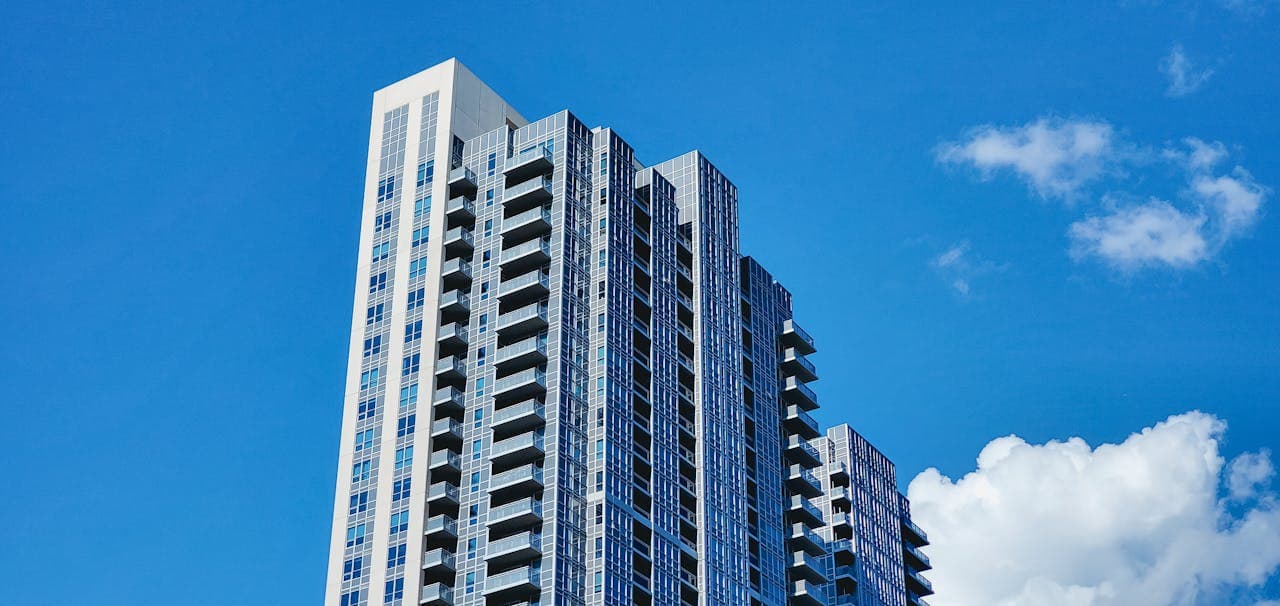
The contribution to the contingency fund is calculated from a projection of the cost of replacing and repairing the common portions over a 25-year horizon, governed by Bill 16 and now required to be set by a professional study. Setting this amount yourself, on the other hand, goes against the requirements of Bill 16 and increases the risk that contributions will not be properly established.
This guide presents the 6 steps for establishing the annual contribution to your Quebec condo’s contingency fund, from gathering the documents to dividing the contribution according to each co-owner’s share, while taking into account the minimum threshold tied to common expenses.
1. Gather the condo’s financial and technical documents
Calculating the contribution to the contingency fund starts with collecting the documents that describe the financial and physical condition of the building. Without them, any budget projection is based on guesswork. The syndicate must gather the following documents:
- The declaration of co-ownership, which sets each unit’s share
- The financial statements for the last 3 years, to establish the amount accumulated in the contingency fund
- The insurance policy, which states the building’s reconstruction value
- The history of interventions and repairs carried out
- Previous inspection reports
These documents feed a reliable projection and give the board of directors an accurate account of what has already been spent. The maintenance log, mandatory under Bill 16, centralizes all of this information and makes document management easier from one year to the next. By bringing together the inventory of components, the history of work and the associated costs, the maintenance log becomes the reference tool for syndicates that want to plan without starting from scratch each time a study is entrusted to a professional. An up-to-date log also turns legal obligations into a concrete funding plan, since every piece of data recorded feeds directly into the calculation of the contribution.
2. Inventory the components of the common portions and their useful life
The inventory of the common portions is the raw material of the calculation. Each major component represents a future expense that the contingency fund will have to absorb. The syndicate lists the building’s key elements: the roof, windows, doors, exterior cladding, balconies, elevator, heating and ventilation system, plumbing, underground parking and waterproofing membrane. Each one has its own life expectancy, which determines when it will weigh on the fund.
| Component | Estimated useful life |
|---|---|
| Roof | 15 to 25 years |
| Windows and doors | 25 to 30 years |
| Exterior cladding | 20 to 30 years |
| Elevator | 25 to 30 years |
For each component, the syndicate records the year of installation, the materials used and the estimated useful life. A visual inspection, backed by an expert’s opinion, adjusts these estimates to the actual condition of the entrance, the common areas and the mechanical systems. This technical analysis forms the basis of the maintenance log required by Bill 16 and determines the building’s long-term durability, since a neglected component quickly turns into an emergency repair funded by a special assessment.
3. Estimate replacement and repair costs over 25 years
Each inventoried component is given a current replacement cost, based on recent quotes or recognized industry cost guides. The syndicate then projects this cost over a minimum 25-year horizon, as required by Bill 16, applying a realistic inflation rate for construction, estimated at 2% to 3% per year in Quebec. This long-term projection lines up each planned expense on a year-by-year timeline, so the cumulative value of the work is clearly visible across all the years covered.
The result gives the total amount the contingency fund will have to cover. The calculation then separates major repairs, meaning the complete replacement of a component, from routine repairs tied to preventive maintenance, because only the former fall under the contingency fund. Routine expenses remain funded by the annual operating budget. This separation avoids inflating the fund’s needs and keeps the contribution based solely on the major expenses ahead.
4. Include financial variables in the contingency fund projection
A reliable projection is not limited to replacement costs: it includes the financial variables that change the fund’s balance over time. The calculation takes four parameters into account:
- The expected inflation rate
- The return on the fund’s investments, when the money is invested
- The current balance of the contingency fund
- Past or planned special assessments
The goal stays the same: make sure the fund’s balance never drops below zero over the next 25 years, even when several major projects are concentrated in a short period. A projection that ignores these future costs underestimates the contribution and leaves the condo short of cash at the worst possible time.
Two approaches frame the calculation of the contribution. The level contribution method sets a constant amount each year, which is simple to manage but sometimes insufficient in the long run. The progressive method increases the contribution from one year to the next to keep pace with inflation, which spreads the effort more fairly between current and future co-owners. The choice between the two depends on the syndicate’s financial profile and the particular situation of each building.
5. Calculate the annual contribution to the contingency fund
Two methods can be used to establish the annual amount, which is then checked against the minimum threshold set by law.
Calculation based on the professional contingency fund study
The contingency fund study produces the most reliable recommendation, because it is based on a complete inspection and a costed projection of the work. Mandatory for all condos in Quebec by August 14, 2028, and then renewed every 5 years, it is carried out by an authorized professional.
Once the report is in hand, the board of directors has 30 days after the annual meeting to set the contributions according to its recommendations. If the study reveals a shortfall, the syndicate has up to 10 years to replenish the fund. The cost of a contingency fund study varies with the size and complexity of the building, an investment that quickly pays for itself through compliance with the regulations in force.
Approximate calculation when there is no contingency fund study
While waiting for the study, two benchmarks help set a provisional contribution large enough to cover foreseeable needs. The first comes from Bill 16, which requires condos still under the developer’s control to contribute the equivalent of 0.5% of the building’s reconstruction value. The second is a prudent benchmark, often mentioned in the industry, which puts the contribution closer to 1% of that same value; since there is no official standard, it mainly serves as an indicative target to confirm with a professional.
For a building with a reconstruction value of $1 million, these benchmarks put the annual contribution between $5,000 and $10,000 until the official report is obtained. Keep in mind that these amounts remain estimates: only the study’s recommendations, governed by the Civil Code of Québec, set the amounts actually needed.
Minimum threshold for the contribution to the contingency fund
Whatever the result, the annual contribution can never fall below the legal threshold of 5% of common expenses, set by article 1072 of the Civil Code of Québec. This legal minimum also often proves insufficient for aging condos.
The OACIQ states that a condo contributing less than $700 per year per unit is heading for problems in the medium term, and more and more syndicates now exceed $1,000 per co-owner. The reconstruction value provides an additional indicator, more representative than the percentage of expenses alone, to know whether the syndicate is meeting its obligation to ensure sustainable funding.
6. Divide the contingency fund contributions among the co-owners
Once the overall amount is established, it still has to be divided: each co-owner pays their part in proportion to their share, meaning the fraction of the building that belongs to them as defined in the declaration of co-ownership, just like regular common expenses. This rule ensures that the contribution follows the relative value of each unit rather than an equal split that would disadvantage the smallest units.
Take a 10-unit condo with a total annual contribution of $15,000. The amount is divided according to each unit’s own share:
| Type of unit (share) | Annual contribution |
|---|---|
| Studio (6%) | $900 |
| Standard unit (10%) | $1,500 |
| Large unit (15%) | $2,250 |
Restricted common portions, such as a balcony, a terrace or a reserved parking space, can be treated separately: their upkeep is funded only by the co-owners who use them, with contributions calculated separately according to the study’s recommendations. This distinction keeps all the co-owners from paying for major work that only affects some of the residents.
When should the contingency fund contribution calculation be reviewed?
The calculation is never set in stone: the contribution must be reassessed regularly to reflect the actual condition of the building and the syndicate’s financial health. The main milestone is the update of the contingency fund study, mandatory every 5 years and entrusted to an authorized professional. Between two studies, the annual budget remains the ideal time to adjust contributions based on the work done, unexpected events and changes in construction costs.
Some events, however, call for an early review, without waiting for the deadline. A disaster, a latent defect discovered in a major component or a new rule coming into force can change the scale of the amounts to set aside. Bill 16 also governs these update obligations, and complying with it keeps the condo in good standing while making sure the contribution stays relevant from one year to the next.
What are the consequences of an insufficient contingency fund?
An undercapitalized contingency fund weakens the whole condo the day major work becomes unavoidable. Instead of drawing on a reserve built up in advance, the syndicate ends up improvising, with concrete effects for each co-owner:
- Unexpected special assessments, sometimes of several thousand dollars, imposed in an emergency to fund a repair that was not provided for
- A loss of resale value for the units, because an insufficient fund is a red flag for any informed buyer
- Difficulty producing the syndicate’s certificate, now required when a condo is sold under Bill 16
On the ground, a large share of condo directors consider their fund insufficient to cover upcoming repairs, a finding that comes up regularly in industry surveys. Bill 16 aims precisely to correct this situation by making the professional study mandatory: by requiring syndicates to take their real needs into account, it protects both the value of the property and the condo’s ability to deal with the unexpected.
Simplify the calculation of your contingency fund contribution with Regisco
Calculating a fair contribution requires accurate technical data, a 25-year projection and a rigorous reading of the legal framework: work that Regisco handles from start to finish. Our teams carry out your condo’s contingency fund study and provide tracking software that adjusts contributions in real time, for financial management with no blind spots.
More than 1,200 mandates have already been completed by our engineers and technologists, all members of a recognized professional order. You get a funding plan that complies with Bill 16 and fits the reality of your building, rather than a rough estimate. Entrust the calculation of your contribution to a team that does this for a living.
Frequently asked questions about calculating the contingency fund contribution
What is the minimum amount to contribute to the contingency fund?
The legal minimum is 5% of common expenses (article 1072 of the Civil Code of Québec). The OACIQ suggests aiming for at least $700 per unit per year and obtaining a professional study to set an amount that truly fits the building.
How often should the contingency fund contribution be reassessed?
The contingency fund study must be renewed every 5 years by an authorized professional. Between two studies, the syndicate’s annual budget allows contributions to be adjusted every year based on the work carried out and the recommendations of the latest report.
Who can carry out the contingency fund study?
The regulation of Bill 16 reserves this expertise for authorized professionals: engineers (OIQ), professional technologists (OTPQ), architects (OAQ), chartered appraisers (OEAQ) and chartered professional accountants (CPA). The professional hired must be independent from the syndicate to guarantee the objectivity of the study.
What is the difference between the contingency fund contribution and a special assessment?
The contingency fund contribution is a recurring annual payment, planned in the syndicate’s budget. A special assessment, on the other hand, is an exceptional amount imposed on co-owners to fund urgent work that was not provided for.
How do you catch up on an underfunded contingency fund?
When the study shows that the fund is insufficient to cover the planned work, the syndicate has 10 years to close the gap. Catching up is done through a planned increase in annual contributions, spread out to remain affordable.
Choose peace of mind by making your condo management easier.
Start your 30-day free trial today. No commitment required, no credit card needed.
Try it for free