Log in
The Projected Budget in a Condominium

The projected budget is one of the syndicate’s central obligations in a Quebec condo. Under the law (article 1072 of the Civil Code of Québec (C.C.Q.)), the board of directors must set each co-owner’s contribution to the common expenses after consulting the meeting, which keeps the building’s financial administration running properly.
Preparing the condo’s projected budget
Every year, the board of directors prepares an annual budget based on projected needs. It covers the operating budget for the maintenance of the common areas, contributions to the contingency fund, maintaining the self-insurance fund and planning special projects. To prepare a realistic budget, the directors can rely on the previous budget, the year-end financial statements, the expert reports the syndicate holds and the quotes received for work or contracts up for renewal.
It’s advisable to wait until the end of the fiscal year before starting to prepare the new budget, and to do so no later than three months after the end of the fiscal year, so the budget can be presented at the annual general meeting.
Consulting the meeting
The projected budget presented at the annual general meeting is subject to consultation, not a vote. The board of directors presents the financial documents for the previous fiscal year, explains the budget and the planned projects, then answers co-owners’ questions. This consultation serves as the basis for any adjustments and makes financial management more transparent. However, co-owners do not vote on the budget, which remains a decision of the new board of directors in place after the meeting.
Why prior consultation matters
Presenting the annual budget for consultation lets the board of directors present the projects planned for the coming year and gather co-owners’ opinions. Every co-owner has the right to ask questions and make comments, which must be recorded in the minutes of the annual general meeting (AGM). For example, a co-owner can ask for details about a planned expense or about contributions to the contingency fund. This feedback lets the board make adjustments to the budget before adopting it.
Even though the budget isn’t put to a vote, it’s crucial for the syndicate to present it to ensure transparency. Co-owners’ comments can help adjust the budget before the board of directors adopts it.

Effective ways to consult
For the best consultation, it’s recommended to send the budget to co-owners before the general meeting, along with a summary table of the expense items. This preparation step lets co-owners prepare their questions ahead of time. Presenting the budget effectively requires the directors to know it well, since they will have the chance to answer questions and note the comments to be recorded in the meeting’s minutes.
Making the budget decision
The directors’ role in the decision
In practice, it’s the new board of directors that adopts the budget after consulting the co-owners. Under article 1072 of the Civil Code of Québec, “the board of directors, after consultation with the general meeting of the co-owners, fixes the contributions of the co-owners to the common expenses” each year. This ensures budget decisions take co-owners’ opinions and needs into account while meeting legal obligations. The syndicate or its manager makes sure the budget decisions cover the various categories of expenses related to the co-ownership and the operation of the building, as well as the amounts to be paid into the contingency fund and the self-insurance fund.
The board of directors’ vote
It’s the new board of directors that votes on the projected budget. In other words, the new board members are the ones who make this decision. The budget must be adopted by a majority of the board of directors to make the decisions official and apply the new condo fees. The budget is set at a subsequent board of directors’ meeting, by a majority vote of the directors (art. 336 C.C.Q.), or in the form of unanimous written resolutions recorded in the syndicate register (art. 354 C.C.Q.)
The voting and decision process
The projected budget is officially adopted by a majority at a board of directors’ meeting or by unanimous written resolution. Once the budget is adopted, each co-owner is informed of their financial contribution and the payment due dates, ensuring transparent and effective financial management of the condo. The syndicate must notify each co-owner without delay of the amount of their contributions and the date they are due.
Sharing the costs
How common expenses are shared
Under article 1064 of the C.C.Q., each co-owner contributes to the co-ownership expenses in proportion to the relative value of their fraction. The board of directors must set each co-owner’s monthly charges based on this share, which is found in the declaration of co-ownership.
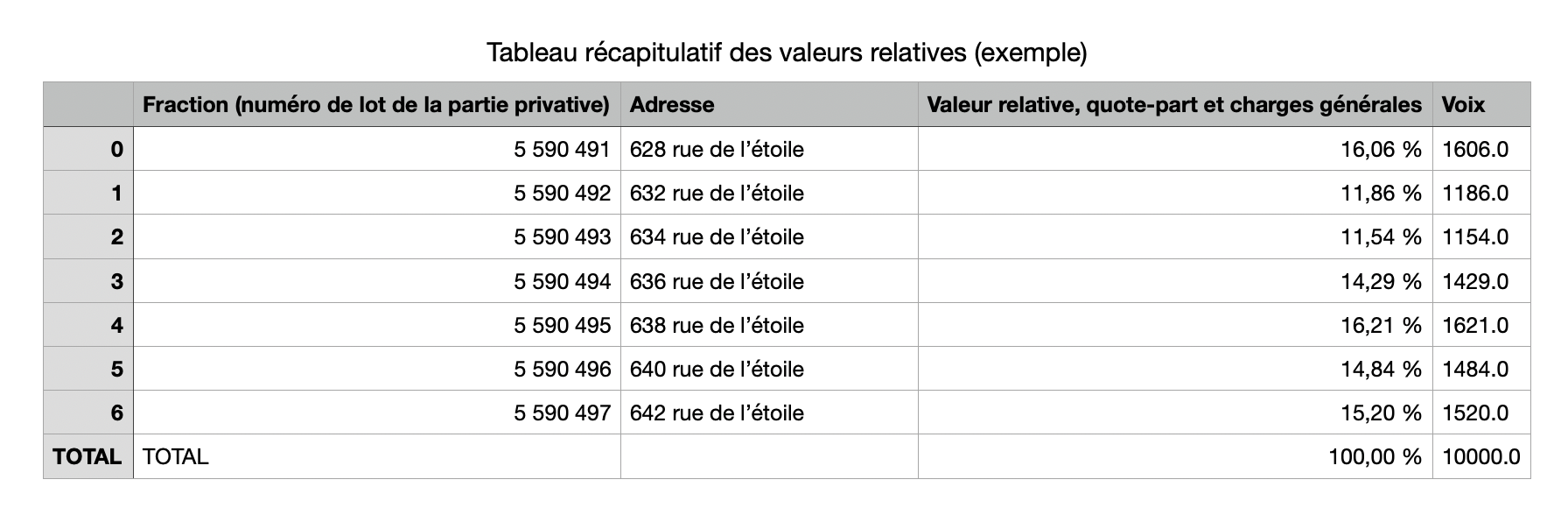 Example of the relative values detailed in the syndicate’s declaration of co-ownership
Handling the unexpected and emergencies
The projected budget must cover every operating expense and the needs of the contingency fund and the self-insurance fund, but also provisions for the unexpected. Part of these provisions is for urgent repairs to the common portions, including restricted common portions, which helps avoid special assessments that would add to co-owners’ financial burden.
Including these provisions in the annual budget is an essential preventive measure. It ensures the condo syndicate has the resources it needs to respond quickly and effectively to urgent situations, preserving residents’ quality of life and the value of the building.
Collecting contributions
How often they are collected
Condo fees are generally collected monthly, although some condos opt for quarterly or annual collection. The collection frequency is usually set out in the declaration of co-ownership. Careful management of collections is essential to maintain the syndicate’s cash flow and avoid budget deficits.
Why diligent collection matters
Directors’ diligence in collecting condo fees is crucial to keeping the condo financially healthy. Rigorous follow-up on condo fee payments ensures the necessary funds are available to cover the required expenses.
Consequences of poor collection
Poorly managed collection of contributions can have serious consequences for the condo. Late or missed payments can lead to budget deficits, making it hard to fund day-to-day expenses and building projects. As a result, co-owners’ quality of life can suffer, with delays in necessary repairs or the deterioration of common areas. In the long run, poor control of the accounts can even affect the value of the units, and with it the value of co-owners’ investments.
Strategies to improve diligence
- Transparent communication: Regularly inform co-owners of expenses and financial needs.
- Automated reminders: Use systems to send payment reminders.
- Late penalties: Apply financial penalties when co-owners fail to pay.
- Easier payments: Offer several payment options (cheques, transfers, pre-authorized debits).
- Proactive follow-up: Set up proactive follow-up on payments to quickly spot late ones.
What goes into the budget
Typical condo expenses
Condo expenses include the ongoing costs of day-to-day operations, provisions for future repairs (contingency fund) and expenses to be incurred in the event of a loss. The main categories include:
- Maintenance and repairs: Cleaning, gardening, repairs, maintenance contracts.
- Utilities: Electricity, gas, water and sewer for the common areas.
- Insurance: Insurance premiums for the buildings and common areas.
- Administrative management: Management fees, accounting, legal services.
- Other expenses: Membership fees for co-owner associations (for example the RGCQ, the ASCQ or Condo Marketing), costs of general meetings, etc.
- Unexpected costs: Any exceptional, unplanned expenses.
Managing the contingency and self-insurance funds
Contingency fund: This fund covers major repairs and the replacement of the building’s ageing equipment and components, such as the heating system, the roof or the elevators. A study carried out by a building professional or a chartered professional accountant is used to estimate the costs and set the required contributions. Periodic reviews incorporate cost changes due to inflation and market fluctuations.
Self-insurance fund: Mandatory since April 2022, this fund covers the amount of the highest deductible in the syndicate’s insurance contract. It makes it possible to pay the deductible quickly in the event of a loss and to rebuild the fund over two years. This measure aims to avoid insurance premium increases caused by frequent claims and to ensure stable financial management.
By including these two funds in the budget process, condo syndicates can manage their finances proactively and sustainably, protecting co-owners’ financial interests and the value of the building. This planning keeps annual condo fee increases steady by anticipating long-term expenses and avoiding unexpected special assessments.
A realistic budget
Why a realistic budget matters
A realistic budget avoids massive increases or unexpected calls for funds. It is based on an analysis of previous years, supplier quotes, the building’s condition and the major work detailed in the contingency fund study.
Techniques for a realistic budget
- Analysis of previous years: Use the financial statements for the fiscal year that just ended to understand spending trends and adjust the budget accordingly.
- Getting quotes: Get quotes from suppliers to know the real prices of work and contracts, so budget forecasts can be adjusted precisely.
- Assessing the building’s condition: Stay informed about the condition of the building to identify urgent and important work to be done. This involves regular inspections and good communication with managers and co-owners.
- Contingency fund study: Have a contingency fund study that details the estimated costs of work in the medium and long term. This study helps anticipate major expenses and plan the contributions needed to keep the contingency fund sufficient.
Producing an annual projected budget
Producing a condo’s projected budget is an essential task for sound, effective financial management. Here are the key steps to follow to prepare an effective budget:
Steps for an effective budget
- Planning and preparing the budget: Gathering financial data (financial statements), assessing future needs, getting quotes.
- Consulting on and adopting the budget: Consulting co-owners, reviewing and adjusting based on feedback.
- Adoption by the board of directors: Formal adoption by the board of directors.
- Sending it to co-owners: Distributing the final budget with detailed explanations and details on how the payments will be applied.
Funding and managing variances
Financial balance
Maintaining financial balance is crucial to the condo’s financial health. It means making sure revenue, made up of co-owners’ contributions, covers the expenses planned in the budget. To achieve this balance, it’s essential to:
- Make sure revenue covers planned expenses: Contributions must be adjusted to financial needs to ensure all expenses are covered.
- Build reserves for the unexpected: Set funds aside for unexpected expenses so they don’t disrupt the operating budget.
- Adjust contributions: Review contributions regularly to make sure they are in line with the condo’s current and future financial needs.
Budget monitoring and corrections
Managing budget variances effectively requires regular monitoring of finances and quick corrective measures to adapt to unexpected changes.
- Regular monitoring:
- Monthly financial reports: Prepare monthly financial reports to track expenses and revenue against the planned budget. This makes it possible to spot variances quickly.
- Comparison with the budget: Regularly compare actual expenses with budget forecasts to identify variances and understand their causes.
- Corrective measures:
- Budget readjustments: If significant variances are identified, readjust the budget to reflect the new financial reality. This can include cutting certain non-essential expenses or reallocating funds.
- Special assessments: In the event of major unexpected expenses, consider special assessments from co-owners to cover the shortfall. This requires holding a special general meeting and justifying the additional needs.
- Renegotiating contracts: Renegotiate contracts with suppliers to get better financial terms if costs exceed forecasts.
- Transparent communication:
- Informing co-owners: Inform co-owners of budget variances and the measures taken to address them. Transparent communication builds trust and cooperation.
- General meetings: Hold general meetings to discuss financial matters and gather co-owners’ views on the measures to take.
Conclusion
Managing a condo’s finances is a complex exercise that requires a structured, transparent approach. By setting a realistic annual projected budget and putting rigorous funding mechanisms in place, the syndicate can ensure sound, sustainable management.
A realistic projected budget avoids underestimated contributions that lead to unexpected increases or special assessments. Budget planning must be based on past financial statements, accurate supplier quotes and a thorough knowledge of the building’s condition, backed by regular contingency fund studies. The law requires this rigour to protect all co-owners.
Using tools such as the maintenance log and contingency fund tracking features like the ones Regisco offers supports better budget planning. By recording all the maintenance and repair work carried out, the maintenance log gives a clear, up-to-date view of the building’s needs. Regisco’s contingency fund tracking module makes it easier to manage these funds proactively by providing tools to track and forecast future expenses. These tools help plan the contributions needed and make sure the contingency fund is always adequately funded.
This obligation of financial rigour, supported by clear communication and effective tools, is the key to ensuring the condo’s financial stability, avoiding difficulties and preserving the value of the building.
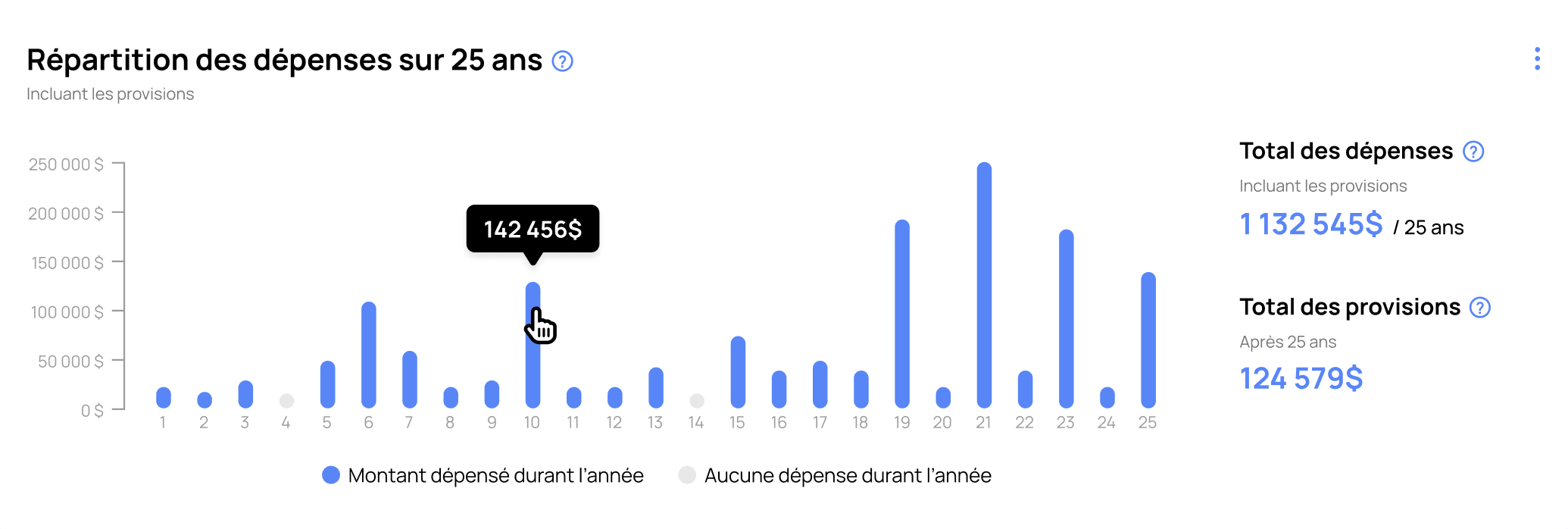 Overview of Regisco’s contingency fund management module
By recording all the maintenance and repair work carried out, the maintenance log gives a clear, up-to-date view of the building’s needs. Regisco’s contingency fund tracking module makes it easier to manage these funds proactively by providing tools to track and forecast future expenses. These tools help plan the contributions needed and make sure the contingency fund is always adequately funded.
In short, rigorous, transparent financial management, supported by clear communication and effective tools, is essential to ensure the condo’s financial stability, avoid financial difficulties, and improve the value of the building and co-owners’ quality of life.
The Regisco Team
Choose peace of mind by making your condo management easier.
Start your 30-day free trial today. No commitment required, no credit card needed.
Try it for free