Log in
Who is responsible for restricted common portions?
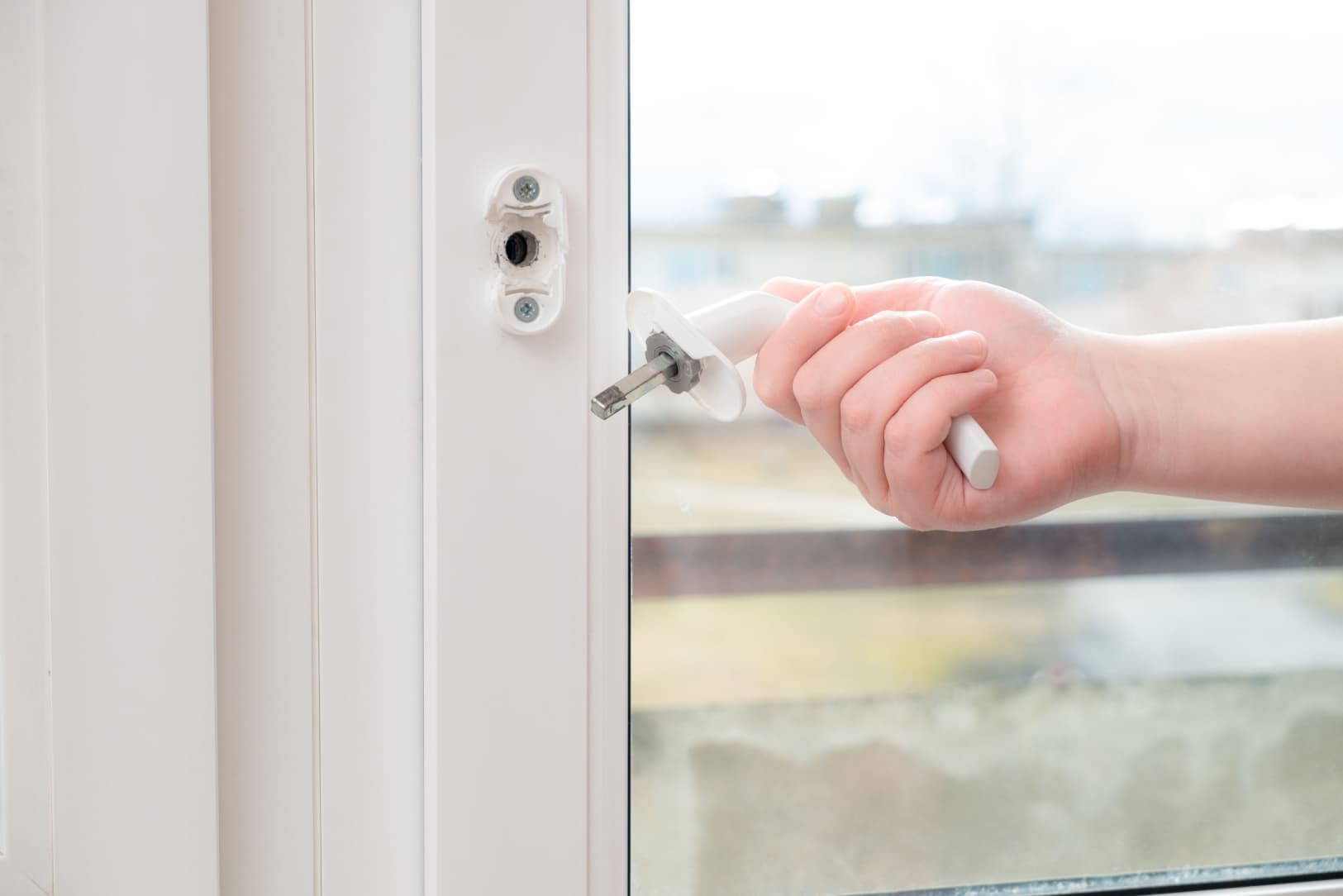
Restricted common portions are common portions that, either by their nature or by their location, are reserved for the exclusive use of one or more co-owners. They can include parking spaces, storage spaces, balconies, doors and windows. These portions are for exclusive use, but does the same apply to responsibility for work on them? That is the question we will try to clear up in this article.
Identifying restricted common portions
The first step in identifying restricted common portions is to check the location of the common lot on the cadastral plans. Cadastral plans are public documents available on the Registre foncier du Québec (Quebec land register), while the list of cadastral lots is found in the third part of your declaration of co-ownership, the description of the fractions. Once you know the location and the boundaries between the common lot and the private lots, you can determine whether a part of the building is a common portion or a private portion. For example, if a parking space is located in the common lot, it is automatically a common portion.
The second step is to look at what makes up the common portions and the restricted common portions. This information is found in the first part of your declaration of co-ownership, the act constituting the co-ownership. Careful! The list is not exhaustive. Declarations of co-ownership are sometimes unclear about exactly what makes up the restricted common portions. Some common portions can be considered restricted simply because they serve only one or more private portions.
Who is responsible for work on restricted common portions
To answer this question, you first need to determine the nature of the work to be done on the restricted common portion or portions. For example, is it work related to maintenance and routine repairs (use), or work related to replacement and major repairs (existence)?
Common expenses resulting from the USE of restricted common portions
General rule
Under article 1064 of the C.C.Q., the co-owners who have the use of restricted common portions are solely responsible for the expenses related to the maintenance and routine repairs of those portions.
Financing, carrying out and managing maintenance activities is the responsibility of the co-owners who benefit from these portions. When several co-owners share the use of a portion, the costs are divided according to the exclusive use rights each co-owner holds.
Exception to the rule
In some cases, the declaration of co-ownership may provide for specific common expenses related to the use of restricted common portions shared among one or more co-owners. For example, the declaration may provide that co-owners with an outdoor parking space will be the only ones to pay the cost of clearing snow from the parking lot.
In that case, the work is financed, carried out and managed according to the rules set out in the declaration of co-ownership.
Common expenses resulting from the EXISTENCE of restricted common portions
General rule
When it comes to expenses related to the very existence of the restricted common portions, including replacement and major repairs, the syndicate’s obligation to preserve the building is taken into account. In other words, the cost of replacing and making major repairs to restricted common portions must be paid by all co-owners, out of the contingency fund.
Financing, carrying out and managing replacement and major repair work is part of the condo syndicate’s responsibilities, and the money is accumulated in the contingency fund according to each co-owner’s relative value.
Exception to the rule
Article 1064 of the C.C.Q. states that the declaration of co-ownership may provide for a different allocation of co-owners’ contributions to the expenses related to major repairs to restricted common portions and to the replacement of those portions. For example, the declaration may provide that co-owners will be responsible for replacing the windows they have the exclusive use of.
In that case, the work is financed, carried out and managed according to the rules set out in the declaration of co-ownership. When no method of managing the financial contributions is specified, the condo can set whatever criteria and parameters suit it. Contributions can therefore be made independently by the co-owners or through a special, periodic contribution to the contingency fund based on the exclusive use rights each co-owner holds.
What is the condo syndicate responsible for
Contrary to what we might think, restricted common portions do not belong to the co-owners who have their exclusive use. They belong to all the co-owners in proportion to their share (undivided ownership), and it is the condo syndicate’s mission to maintain and preserve them (art. 1039 C.C.Q.). As a result, the work must always be authorized by the syndicate and remain under its control, in particular through the board of directors, which represents the syndicate and is the competent decision-making body. In addition, article 1077 C.C.Q. provides that the syndicate is liable for damage caused to co-owners or third parties by a design or construction defect or by a lack of maintenance of the common portions.
In practice, the syndicate is responsible for approving and supervising all work related to the existence and safety of the common portions, including restricted ones. The syndicate must also make sure that maintenance and repairs are carried out properly. When maintenance is lacking, it must take corrective action.
How to make sure maintenance is done properly
It is in all co-owners’ interest to make sure maintenance is done properly. After all, if a component is poorly maintained, its life will be shortened. Likewise, a well-maintained component is likely to outlast its useful life. The quality of maintenance will therefore have a financial impact on all co-owners, since replacement costs are paid by everyone, unless otherwise provided.
A preventive maintenance program is essential for communicating to co-owners the requirements and guidelines for carrying out maintenance. The maintenance program can include information on the maintenance frequencies to follow, or on the products to use to waterproof concrete or protect wood or steel elements. It can even be part of a co-owner’s manual given to new occupants.
For larger maintenance jobs that require technical skills or knowledge, it would be better for the board of directors to plan and coordinate the work. Taking charge in this way makes sure the work gets done and simplifies it, while lowering the related costs for each co-owner. Once the work is finished, the co-owners will be required to reimburse the actual cost of the work in proportion to the exclusive use right assigned to them.
The maintenance program should also include visual inspections to check the condition and quality of maintenance of the restricted common portions, even when they are harder to reach. This way, the board of directors gives itself the means to take action when maintenance is not being done.
Finally, if the condo syndicate is not satisfied with how maintenance is being done, it can adopt a building by-law to govern the financing, execution and management of maintenance work. To amend or add a building by-law, the vote must be carried by an absolute majority at the meeting of co-owners (50% plus one of the votes of the co-owners present or represented at the meeting).
Our team will be happy to help you set up and keep up your maintenance log. Contact us for more information!
The REGISCO team
Choose peace of mind by making your condo management easier.
Start your 30-day free trial today. No commitment required, no credit card needed.
Try it for free